Showing posts with label US privacy policy. Show all posts

Friday, March 12, 2010

Many Mobile Phones Now Equipped to Detect Personal Activity, Not Just Location

The newest incarnation of the cellular phones offered by most manufacturers contain "accelerometers". These sophisticated sensors are easily co opted to determine what exactly the carrier is doing. The phone can tell if you are walking, sitting, driving, even eating.

Manufacturers of the co opting software and additional add-ons are are quick to point out the potential uses for employers.

BBC News - Mobile that allows bosses to snoop on staff developed

The obvious ramifications for privacy are tremendous. Access of the data falling into the wrong hands could bring about an entirely new level of thievery and voyeurism, especially in light of the Obama Administration's recent statement that Americans have "no reasonable expectation of privacy" as to the location history of their mobile phones.

The likelihood of acceptance, however, as a so-called "self protection" measure, or "mothering" feature is likely to allow for mass use, according to some industry leaders.

Saturday, February 13, 2010

Obama Administration: "No reasonable expectation of privacy" of your mobile phone locations tracking


BIG BROTHER RETURNS

The Obama administration has asserted its authority to maintain what it earlier referred to as Bush-era, draconian, big brother privacy invasion of American citizens.

With all of the next-generation mobile phones giving away your location to anyone interested enough to look, a new buffet of opportunities may be provided to your local criminal.

"I HAVE NOTHING TO HIDE"

Think you have nothing to hide? As yourself if you would answer these questions if posed by some stranger in a parking lot:

1. Where do you sleep?
2. Where do your kids sleep?
3. When are you home?
4. When are your kids home without you?
5. When is nobody home?
6. Where do you work?
7. When are you at work?
8. Where do you bank?
9. When do you go to the bank?
10. Where do you go on Saturday night?
11. Where were you on X date last year?
12. What schools do your kids go to?
13. How do they get home from school?

Do these make you uncomfortable? If so, you may in fact have 'something to hide'.

The obvious point is that having 'nothing to hide' is relative. Nothing to hide from Whom?

Nothing to hide from "the Government"? Which Government? Nothing to hid from government employees? Nothing to hide from government contractors? Nothing to hide from your next door neighbor? Nothing to hide from your co-worker? Nothing to hide from you next-door neighbor's daughter's degenerate brother-in-law? Nothing to hide from your co-worker's criminal cousin visiting from Milwaukee? Nothing to hide from the home invader lurking in the parking lot of the grocery store, looking for his next victim?

Exactly how open are you with your your invitation for others to view your private information?

OBAMA ADMINISTRATION: "NO REASONABLE EXPECTATION OF PRIVACY"

Apparently, according to the Obama Administration, you have "no reasonable expectation of privacy" of the tracking information produced by your mobile phone.

Feds push for tracking cell phones | Politics and Law - CNET News


As always, the federal government cites terrorism as its reason for needing the capability of tracking granny as she buys her depends, or Dad's stop at a slot machine. But so far, they've only shown use against American Citizens in garden-variety crimes as their told-you-so moments.

Many of course would argue that allowing such tracking to fall outside the realm of constitutional privacy puts Americans at risk of criminal activity and government abuse. As Obama argued in his campaign, the government has a strong and valid system for obtaining warrants for the searches they claim they need. They seem to some to be addicted to the voyeurism, however, facilitated by the practices of previous administrations.

Thursday, February 11, 2010

Religious Right Weighs In On Human Tracking Chips


The religious right is beginning to voice concern of the concept of mandatory human chipping. The practice of forceably installing tracking chips in human beings has been proposed by others on the right, as a means of tracking people who have lost their civil rights, such as certain kinds of convicted criminals.

The State of Virginia has cited religious freedoms in its decision to outlaw the practice:

House Oks Bill Banning Implanted Tracking Devices | WSLS 10

Del. Mark L. Cole (R-Fredericksburg), the bill's sponsor, said that privacy issues are the chief concern behind his attempt to criminalize the involuntary implantation of microchips. But he also said he shared concerns that the devices could someday be used as the "mark of the beast" described in the Book of Revelation in the Christian Bible.

Full story of the run-up to the vote Washington Post

Wednesday, February 10, 2010

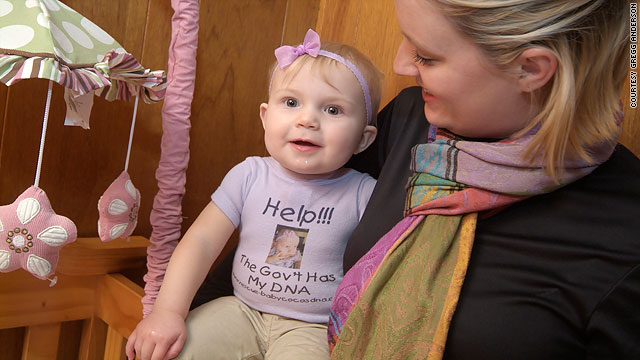
The government has your baby's DNA - CNN.com


Hospitals have been collecting and keeping the DNA of our children for years.

The government has your baby's DNA - CNN.com

The liability to which the the Government exposes itself by this carelessness is so catastrophic, it is difficult to tally. The opportunity for government employee abuse and a new "perfect crime" level of identity theft are obvious.

And here come the class actions...

Wednesday, February 3, 2010

INTERNATIONAL FUNDS TRANSFERS FROZEN BY SWIFT

SWIFT Says No Transfers until Parliament Votes

The Society for Worldwide Interbank Financial Transactions (SWIFT) says it will not share European banking data with U.S. officials, pending further action by the European Parliament, reports Handelsblatt (in German).

On February 10, Parliament will vote whether to accept the SWIFT agreement reached between U.S. authorities and the EU Council of Ministers late last year, prior to the Lisbon Treaty going into effect. The agreement allows for the sharing of European citizens' transaction data with the U.S. Justice Department for counterterrorism efforts. Under the deal, SWIFT was to have resumed the data sharing as of February 1, but the society now says it will not engage in such transfers until Parliament has had its say.

It is widely expected that Parliament will vote against extending the agreement next week. "This shows that companies in the EU take Parliament seriously," says Henriette Tielemans, a partner in the Brussels office of Covington & Burling LLP. "It also shows that Parliament has every intent to use the powers that it received under the Lisbon Treaty."

Monday, February 1, 2010

EU Parliament to Reject US Demand for Bank Transfer Data


Recent years of what some have described as over-reaching US policy has lead to a backlash from the European Parliament.

SWIFT, the Society for Worldwide Funds Transfers, is the mechanism by which nearly all international bank transfers are sent and received, and by which funds are verified internationally. SWIFT handles some 15 million international money transfers each day.

Secret deals during the last decade moved SWIFT servers from Europe to US Soil, so that US intelligence agencies could monitor money transfer activity over the SWIFT system. This arrangement met with severe opposition when it saw the light of day in 2009, as SWIFT defied US requests and moved its servers back to Europe.

FULL STORY: SPIEGEL ONLINE


Now the European Parliament is likely to spike a deal which would allow US terrorism investigators access to European bank transfer data. Privacy advocates oppose the deal and Germany's Federal Criminal Police Office says the data profiling is ineffective in counter terrorism efforts.

Friday, January 29, 2010

US Loses Ground in Swiss Diplomatic Banking Standoff

UBS CUSTOMER WINS SWISS APPEAL, DENIES CAUSE IN TAX EVASION CLAIMS

4,450 OTHER CASES IN JEOPARDY BY PRECEDENT-SETTING CASE

FULL STORY - NY TIMES

The case follows a deal in August in which Switzerland agreed to give data to authorities in the United States on as many as 4,450 UBS accounts to settle a lawsuit in which the United States had sought information on as many as 52,000 accounts. This ruling throws doubt on whether Switzerland will be able to turn over all 4,450 accounts.

Tuesday, January 19, 2010

Credit Issuers Turn to Social Networks to Profile You


It's not just your score anymore. Now it's your friend list too.

CNBC: "They're able to scour the social media universe. They are constantly listening and reporting back."

-Jesse Torres, CEO of Pan American Bank in Los Angeles, regarding the new Social Network Information Aggrigators

COMPLETE STORY

Monday, January 11, 2010

New Hampshire Bars RFID


Leading the nation in what is sure to be a wildfire of similar legislation, NH House votes to bar the unauthorized implants of tracking chips in people and clothing, criminalizes the use of RFID for tracking consumers.

FULL STORY: ASSOCIATED PRESS

In a further sign of things to come, the State is updating its anti-skimming laws to prohibit the closing of data broadcast by RFID-enabled credit and debit cards. The affect may render RFID without value to retailers otherwise supporting its use.

Sunday, October 11, 2009

Auto License Plates With RFID: Sport-bike Outlaws Cited as National Cause

In one of the strangest, most reaching arguments for promoting RFID contractors, the RFID Journal has printed the argument that speeders riding sports motorcycles across the US are such a menace to society that we all must now broadcast an ID number from our license plates, from 30 feet away, to anyone who wants to read it.

Believe it or not, the article actually makes the case that if the speeding sport bikers across the US only had RFID chips in the license plates, which they routinely remove or "flip" to hide, then the stalwart police would not have to give high speed and winged persuit. The image is one of the officer in his crisp uniform, slowly shaking his head as the biker goes by at mach 2, returning to his latte secure in the knowledge that the biker would get his ticket and summons in the mail.

"Drat!" Says the biker when he gets the later uniformed knock on his door, "foiled again by the RFID chip!"


Needless to say, not only would the bikers remove the entire plate if they want, since the cops can't catch them anyway, they would also buy, borrow or steal other license plates to broadcast the wrong number to the idiot with the latte.

Here's the article: Please comment!


U.S. Department of Transportation Solicits Proposals From Small RFID Companies


In actuality, it doesn't need to be a motorcycle. What do they do when they are outrun by a bicycle?


In a generous handout to what will surely be picked up by both civil libertarians and ultra-right wing conspiracy nuts, the Federal Government has jumped into the fray by having the Departement of Transportation request bids by RFID contractors to submit solution bids.

Wednesday, September 23, 2009

Costing US Jobs: FBI’s Data-Mining System Sifts Airline, Hotel, Car-Rental Records, May Be Chasing Away Business

Competetive Privacy Policy is the new vernacular referring to companies and jurisdictions which demonstrate an understanding that personal security requires personal privacy, and that the sacrifice of privacy sometimes necessary to do business with a company, or to do business within a jurisdiction, has a monetary and social value to consider, to safeguard, and at times to trade.

Companies and organizations large and small are fleeing countries with privacy policy which does not recognize the value of personal and private business data gathered, or the responsibility of the holder of the data to protect it.

Case in point: US Loses SWIFT Wire Transfer System to Europe. Again.

http://www.irishtimes.com/newspaper/world/2009/0728/1224251491497.html

Case in point: FBI invades tourism industry. Again.

FBI’s Data-Mining System Sifts Airline, Hotel, Car-Rental Records Threat Level Wired.com

Case in point: Google Street View challenged in U.K.

http://news.cnet.com/8301-1009_3-10202817-83.html?tag=mncol;title

Companies have choices as to where they operate from, where they base themselves, and where they pay taxes. Jurisdictions have to compete to get the 'customer'. Arrogance is not paying off. US lawmakers may need to get out more often to see what the competition is offering.

http://www.isoc.org/briefings/015/

http://www.msnbc.msn.com/id/15221111/ns/technology_and_science-privacy_lost/