Wednesday, March 10, 2010

WARNING: Copy Machines Save Everything You Copy

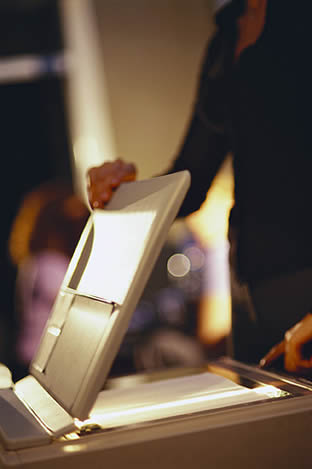
Before you copy that tax return, your ID, child's passport application, or legal documents, you'd better check the privacy policy of the copy machine owner.

Copy machines are not the Mimiagraph machines of old. They are computers attached to very sophisticated scanners. Whatever you copy is stored in that computer. For how long? Ask the machine's owner.

Where does your lawyer make copies? Who copied your loan application? what about that lease? Who copied your daughters's school amission forms? All of those images are easily extracted from the copier, usually with a laptop, and not always by the owner. Who has access to copiers containing your private information?

Chances are, you shouldn't risk copying anything with personal information on any copy machine which you do not own.

Copy Machines Can Store Your Private Info - wbztv.com

Tuesday, March 9, 2010

Classmates.com Sued Over Privacy Setting Change


Changing privacy options without giving users the whole picture and a real opt-out option can be risky. Classmates.com apparently hoped nobody would notice.

MediaPost Publications - High School Reunion Ruin: Classmates.com Sued Over Opt-Out Privacy Setting Change 03/09/2010

Lifelock to pay $12 Million in False ID Theft Protection Claims Settlement


"...Protection actually provided left enough holes that you could drive a truck through it" - FTC

03.09.2010 International Association of Privacy Professionals--/

In a press conference held Tuesday, March 9, Federal Trade Commission (FTC) Chairman Jon Leibowitz and Illinois Attorney General Lisa Madigan announced that LifeLock, Inc., has agreed to pay $11 million to the FTC and $1 million to a group of 35 state attorneys general to settle charges that the company’s claims of providing 100-percent protection against identity theft were false.


“While LifeLock promised consumers complete protection against all types of identity theft, in truth, the protection it actually provided left enough holes that you could drive a truck through it,” Leibowitz said.


In addition to the $12 million settlement, LifeLock and its co-founders Richard Todd Davis and Robert J. Maynard, Jr. are prohibited from making deceptive claims and required to better safeguard customers’ personal information.


According to the FTC’s complaint, LifeLock’s claims included protecting against identity theft “ever happening to you” and being “the first company to prevent identity theft from occurring.” The FTC, however, contended that LifeLock’s practice of placing fraud alerts on its customers’ credit reports only protected them against specific types of ID theft, but had no effect on the most common form: the misuse of existing credit card and bank accounts.


“There is nothing you can do or purchase that will provide you with a 100-percent
guarantee against identity theft,” Madigan said during Tuesday’s announcement, urging consumers to be aware of the steps they can take to protect their personal information. “Most of what they did you can do on your own, and you can do it for free.”


In addition to what the FTC described as deceptive identity theft protection claims, Leibowitz noted that LifeLock’s own data security practices did not adequately protect its customers’ information.


According to an FTC press release issued after Tuesday’s conference, LifeLock routinely collected sensitive information from its customers, including their Social Security numbers and credit card numbers, but did not encrypt the data. Additionally, the FTC alleges, “sensitive consumer information was not shared only on a ‘need to know’ basis…the company’s data system was vulnerable and could have been exploited by those seeking access to customer information.”


The FTC has confirmed it will use the $11 million it receives from the settlements to provide refunds to consumers. For more information, visit www.ftc.gov/lifelock.

Jennifer L. Saunders IAPP

Wednesday, February 24, 2010

Google Execs Convicted on Privacy Charges

Google
International Association of Privacy Professionals (IAPP)/- 24 Feb. 2010

(Updated 1:31 p.m. ET)

In a decision that is expected to have ramifications worldwide, an Italian judge convicted three Google executives on privacy violations in Milan court today. Global Privacy Counsel Peter Fleischer and two other executives were found guilty of failing to comply with Italian privacy code in allowing a disparaging video to be posted online. A fourth defendant was acquitted.

Google described the decision as an “astonishing” attack on freedom of expression on the Internet. All three will appeal the decision.

Judge Oscar Magi ordered a six-month suspended jail sentence and fines forPeter Fleischer
Chief Counsel of Global Privacy among those convicted. Fleischer, Chief Legal Officer David Drummond and former Google Italy board member George De Los Reyes. The three were absolved of defamation charges.

Outside the Milan courthouse, public prosecutor Alfredo Robledo said the decision sends a clear signal. "A company's rights cannot prevail over a person's dignity.”

The trial stems from the posting of a video to Google Video—a YouTube predecessor—that showed teenage boys taunting a classmate with Down syndrome. Prosecutors charged that the executives did not do enough to keep the offensive video off its site.

The case opened the door for a debate about who is responsible for content posted to the Internet. EU law is cloudy concerning user-generated content.

In a statement, Peter Fleischer said the ruling sets a dangerous precedent. “If company employees like me can be held criminally liable for any video on a hosting platform…then our liability is unlimited.” He said today’s decision raises questions for the operators of many Internet platforms.

The ruling has provoked reactions from privacy and legal experts worldwide. “It is quite hard to comment on such an incredible sentence,” said Rome lawyer and privacy expert Rocco Panetta of Panetta & Associati, who described the sentence as “most interesting from a legal point of view” and one that “needs to be assessed with prudence.”

A Centre for Information Policy Leadership advisor likened the decision to prosecuting the post office for hate mail that is sent in the post. “I find it worrying that the chief privacy officer who had nothing to do with the video has been found guilty,” said Richard Thomas. “It is unrealistic to expect firms to monitor everything that goes online.” - IAPP

Saturday, February 13, 2010

Obama Administration: "No reasonable expectation of privacy" of your mobile phone locations tracking


BIG BROTHER RETURNS

The Obama administration has asserted its authority to maintain what it earlier referred to as Bush-era, draconian, big brother privacy invasion of American citizens.

With all of the next-generation mobile phones giving away your location to anyone interested enough to look, a new buffet of opportunities may be provided to your local criminal.

"I HAVE NOTHING TO HIDE"

Think you have nothing to hide? As yourself if you would answer these questions if posed by some stranger in a parking lot:

1. Where do you sleep?
2. Where do your kids sleep?
3. When are you home?
4. When are your kids home without you?
5. When is nobody home?
6. Where do you work?
7. When are you at work?
8. Where do you bank?
9. When do you go to the bank?
10. Where do you go on Saturday night?
11. Where were you on X date last year?
12. What schools do your kids go to?
13. How do they get home from school?

Do these make you uncomfortable? If so, you may in fact have 'something to hide'.

The obvious point is that having 'nothing to hide' is relative. Nothing to hide from Whom?

Nothing to hide from "the Government"? Which Government? Nothing to hid from government employees? Nothing to hide from government contractors? Nothing to hide from your next door neighbor? Nothing to hide from your co-worker? Nothing to hide from you next-door neighbor's daughter's degenerate brother-in-law? Nothing to hide from your co-worker's criminal cousin visiting from Milwaukee? Nothing to hide from the home invader lurking in the parking lot of the grocery store, looking for his next victim?

Exactly how open are you with your your invitation for others to view your private information?

OBAMA ADMINISTRATION: "NO REASONABLE EXPECTATION OF PRIVACY"

Apparently, according to the Obama Administration, you have "no reasonable expectation of privacy" of the tracking information produced by your mobile phone.

Feds push for tracking cell phones | Politics and Law - CNET News


As always, the federal government cites terrorism as its reason for needing the capability of tracking granny as she buys her depends, or Dad's stop at a slot machine. But so far, they've only shown use against American Citizens in garden-variety crimes as their told-you-so moments.

Many of course would argue that allowing such tracking to fall outside the realm of constitutional privacy puts Americans at risk of criminal activity and government abuse. As Obama argued in his campaign, the government has a strong and valid system for obtaining warrants for the searches they claim they need. They seem to some to be addicted to the voyeurism, however, facilitated by the practices of previous administrations.
Thursday, February 11, 2010

Religious Right Weighs In On Human Tracking Chips


The religious right is beginning to voice concern of the concept of mandatory human chipping. The practice of forceably installing tracking chips in human beings has been proposed by others on the right, as a means of tracking people who have lost their civil rights, such as certain kinds of convicted criminals.

The State of Virginia has cited religious freedoms in its decision to outlaw the practice:

House Oks Bill Banning Implanted Tracking Devices | WSLS 10

Del. Mark L. Cole (R-Fredericksburg), the bill's sponsor, said that privacy issues are the chief concern behind his attempt to criminalize the involuntary implantation of microchips. But he also said he shared concerns that the devices could someday be used as the "mark of the beast" described in the Book of Revelation in the Christian Bible.

Full story of the run-up to the vote Washington Post

Wednesday, February 10, 2010

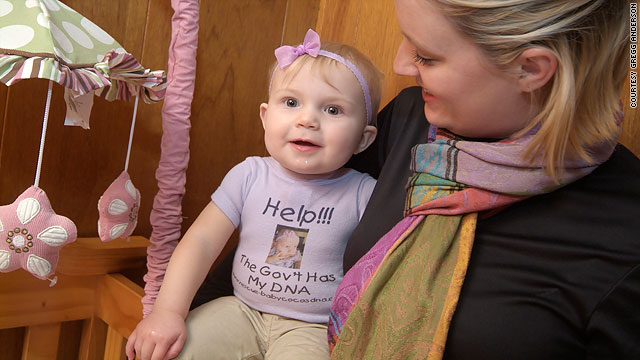
The government has your baby's DNA - CNN.com


Hospitals have been collecting and keeping the DNA of our children for years.

The government has your baby's DNA - CNN.com

The liability to which the the Government exposes itself by this carelessness is so catastrophic, it is difficult to tally. The opportunity for government employee abuse and a new "perfect crime" level of identity theft are obvious.

And here come the class actions...